Expiry Day Trading: NIFTY, SENSEX & Gamma Risk | 915


Expiry date trading is very different from normal day trading. On the day of expiry, price movements can be extremely sharp, and since theta decay is highest, premiums also decline quickly. Trades which are in profit can become loss-making in a split second. For experienced traders, expiry day offers many opportunities, but for beginner traders, it can lead to unavoidable losses. To be successful in expiry trading, the mantra is not just to react quickly but to be prepared before even the market opens.
How to Trade Expiry Day
Here is what professional traders do even before the expiry day starts -
Step 1: Mark Important Price Zones Before Market Opens
Some of the key levels to mark are the important zones from where the markets can reverse. These important zones can be previous day high (PDH) and previous day low (PDL). If the previous day's close falls between the PDH and the PDL, it is also marked. The next important thing to mark is the zones where the open interest is the highest. Some traders also mark important support and resistance zones before the expiry day starts.
Here is the example for 22 Mar 2026 -
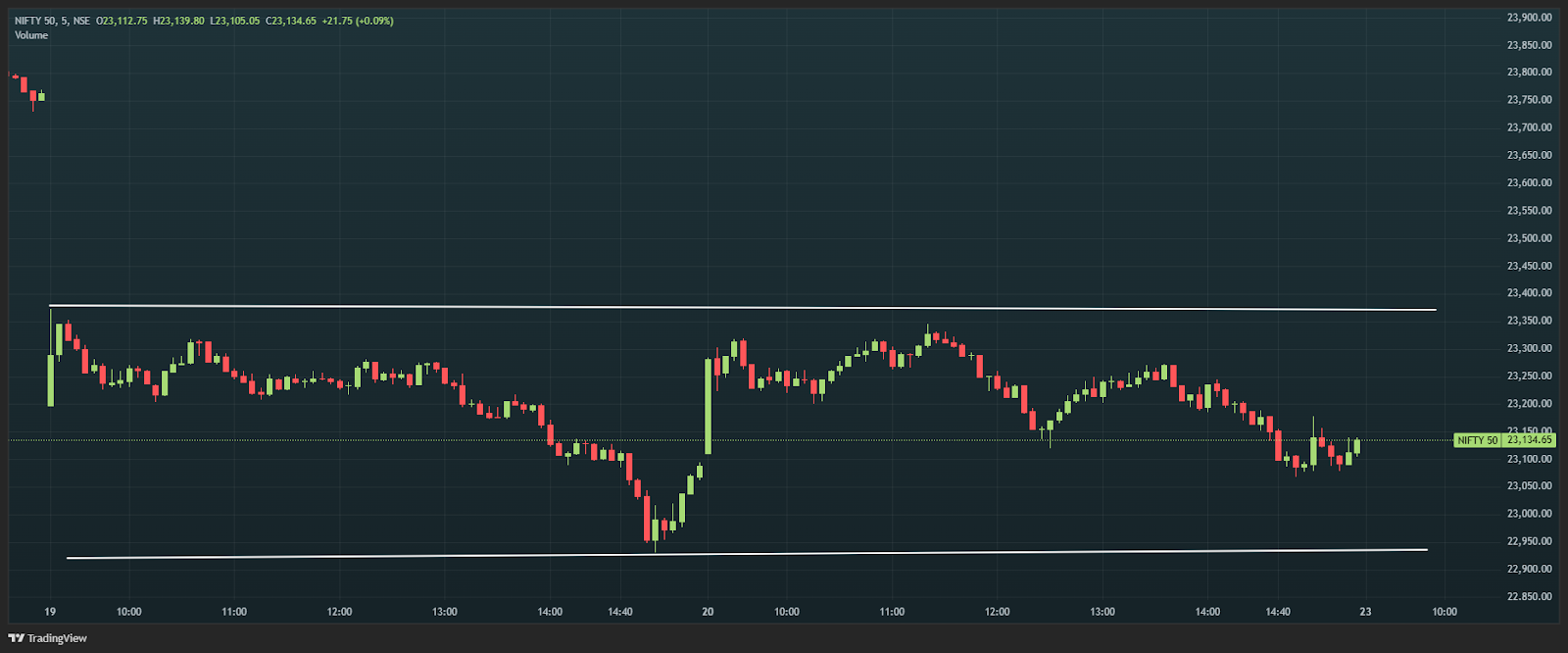
The PDH and PDL are marked. They are also important support and resistance zones. The upper level is 23,375, and the lower level is 22,935.
The next step is to check the option chain.
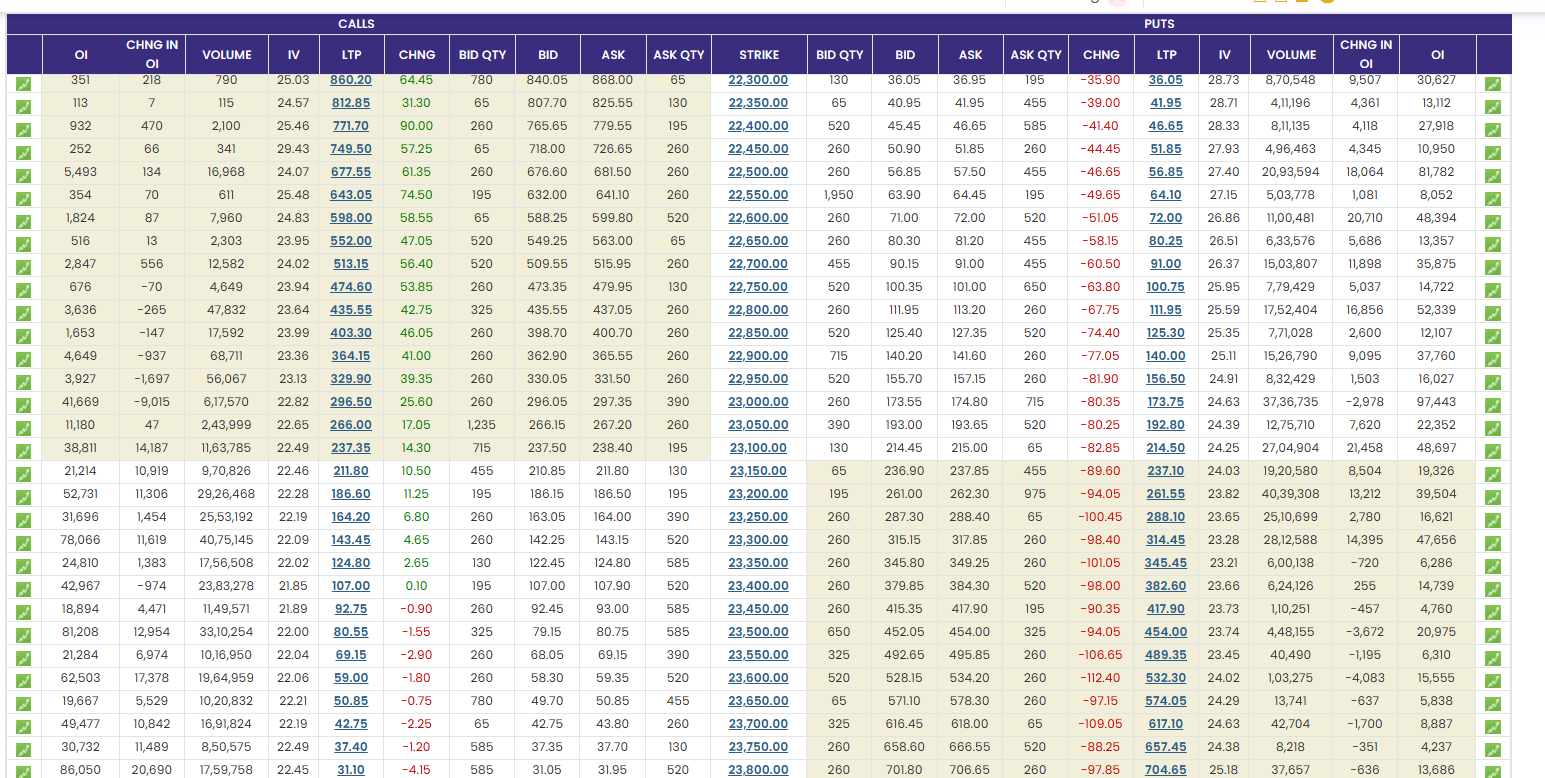
As the chart shows, the highest OI on the call side is 23,300 CE, and on the put side, it is 23,000 PE.
Expiry day movement often gravitates toward areas with large positions. When prices approach these levels, option premiums react quickly. Preparation allows you to respond calmly rather than react emotionally.
Step 2: Decide Your Trading Style in Advance
Expiry date trading can be done in multiple ways. Some traders like to write options, and a common strategy is to short OTM options where the highest OI is generated. In our example, a trader may short 23,300 call options and 23,000 put options.
- Sell 23,300 CE at ₹143
- Sell 23,000 PE at ₹173
The total premium received is ₹316. Then the stoploss and target can be based on the trader's expectations.
Another day of trading on expiry day is to trade on berakouts. In this case, the option buyer would wait for the important support and resistance zones to be broken, then go for a spread strategy. If the resistance is broken, he may go for a bull call spread, and if the support is broken, he may go for a bull put spread.
Some traders may even opt for fully hedged strategies, such as an iron condor. In this case, they are hoping the market will continue to trade between these support and resistance levels and want to take advantage of theta decay.
Step 3: Things to keep in mind
In all strategies, the trader should keep one thing in mind.
First, the options behave differently at different times on the expiry day. In the morning session, usually a range is created. In the mid-session, premium decay begins, and in the final couple of hours, options may react very quickly to even small price movements.
Traders should focus on risk management rather than taking on too many trades. Since the premiums will decay quickly, traders might be tempted to take many trades. However, over-trading can lead to high transaction costs and decision fatigue. It is better to focus on good trades rather than just trading unquestioningly.
Traders should also keep in mind that Vega and volatility can increase unexpectedly on expiry day. Many factors, such as news events, global market movements, and sudden institutional activity, can drive strong moves. Positions that might appear safe in the morning can become loss-making very quickly. Should respect risk management and should put their stop losses in the system.
Common Mistakes on Expiry Day
While expiry trading is extremely exciting, some common mistakes are made by beginner traders. Some other common mistakes include:
- Taking oversized positions because premiums look small.
- Selling options very close to the current price without defined risk.
- Entering trades without a clear plan.
- Reacting to every price movement instead of focusing on structure.
- Ignoring sudden volatility expansion.
Summary
Expiry trading should be done very carefully, with a very methodical approach. The traders should avoid predicting the direction and instead focus on how the option's behaviour might change on the day of expiry. Traders should also do their homework before going for trading on the expiry day. Rather than going for naked option buying, a spread strategy offers a better risk-adjusted return to the traders. Consistency in trading often comes from disciplined preparation rather than fast reaction.