ATM vs Far OTM Options: Why Quality Beats Quantity | 915


A lot of traders, option buyers, and option sellers like to trade (Out-Of-The-Money) OTM options for various reasons. Some of the reasons why option buyers look to go for OTM options are:
- They are cheap
- More quantity can be traded
- The risk per option is less
Buying 500 units of a ₹5 option feels more exciting than buying 50 units of a ₹120 option. The thought processes are that if there is a move, the profit will be huge on 50 units. However, this thought process comes with a hidden risk. If the move does not come through, the entire premium will be zero.
One reason option writers tend to go for OTM options is that they have a high probability of expiring worthless.
However, the problem is that if the market moves in favour, the trader's profit is capped at just the small premium they received.
Professional traders usually prefer trading around ATM (At-The-Money) options, even though they appear more expensive. And the reasons for trading ATM options are probability, liquidity, risk exposure, and realistic payoff behaviour.
Understanding ATM vs Far OTM
Nifty is trading at 23,114.50 on 22 Mar 2026. Here is the option chain:
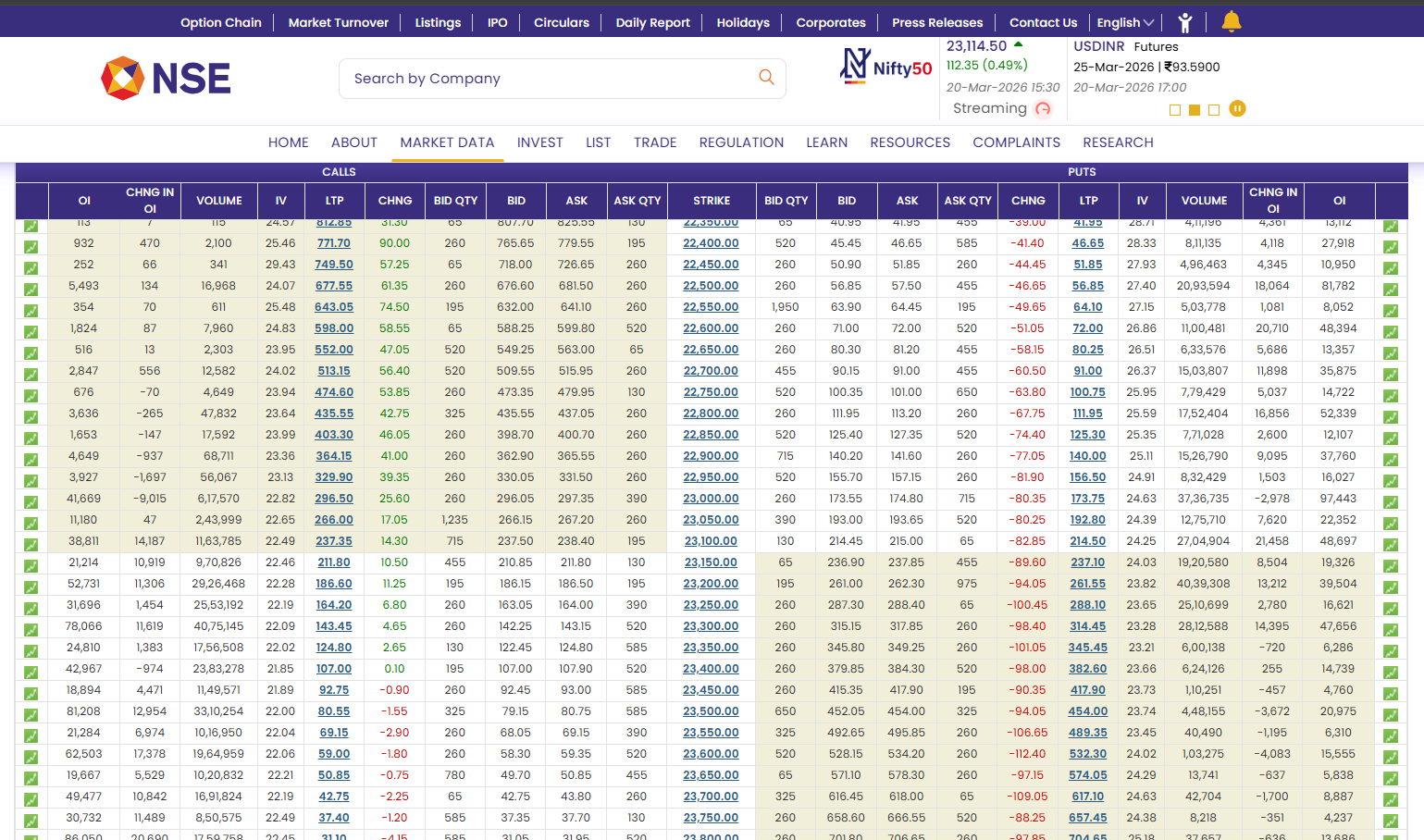
Since Nifty started at 23,114, 23,100 is the ATM option. We can see that the price of the 23,100 call option is ₹237, and the price of the 23,100 put option is ₹214. Any option trading at a price lower than these levels is an OTM option.
For example, a 23,500 call option, currently trading at ₹80.5, is OTM. Similarly, a 22,500 put option, currently trading at ₹56.8, is OTM.
As we can see, the OTM options are looking more attractive because they are cheaper. An option buyer who wishes to buy an ATM call option will need the following margin:
₹237 x 65 = ₹15,405
On the other hand, if you take three lots of OTM call options, he will require a similar margin.
₹80 x 65 x 3 lots = ₹15,600
This gives a false sense of attractiveness to ATM options. But low price does not necessarily mean good value. Options are priced based on probability. Cheaper options are cheap for a reason.
Probability of Meaningful Movement
Understanding Delta is important when trading ATM versus OTM options. The Delta of an ATM option is approximately 0.5. Someone who's taken an entry at the ATM option and the Nifty moves up by 100 points can make approximately 50 points in profit.
On the other hand, the far OTM options trading at ₹80 are likely to have a delta of only 0.1. So even if Nifty moves up by 100 points, the profit per lot will only be around 10 points. So even with 3 lots, the total profit will be just 30 points. This means you are dependent on a large move happening quickly, which statistically occurs less frequently.
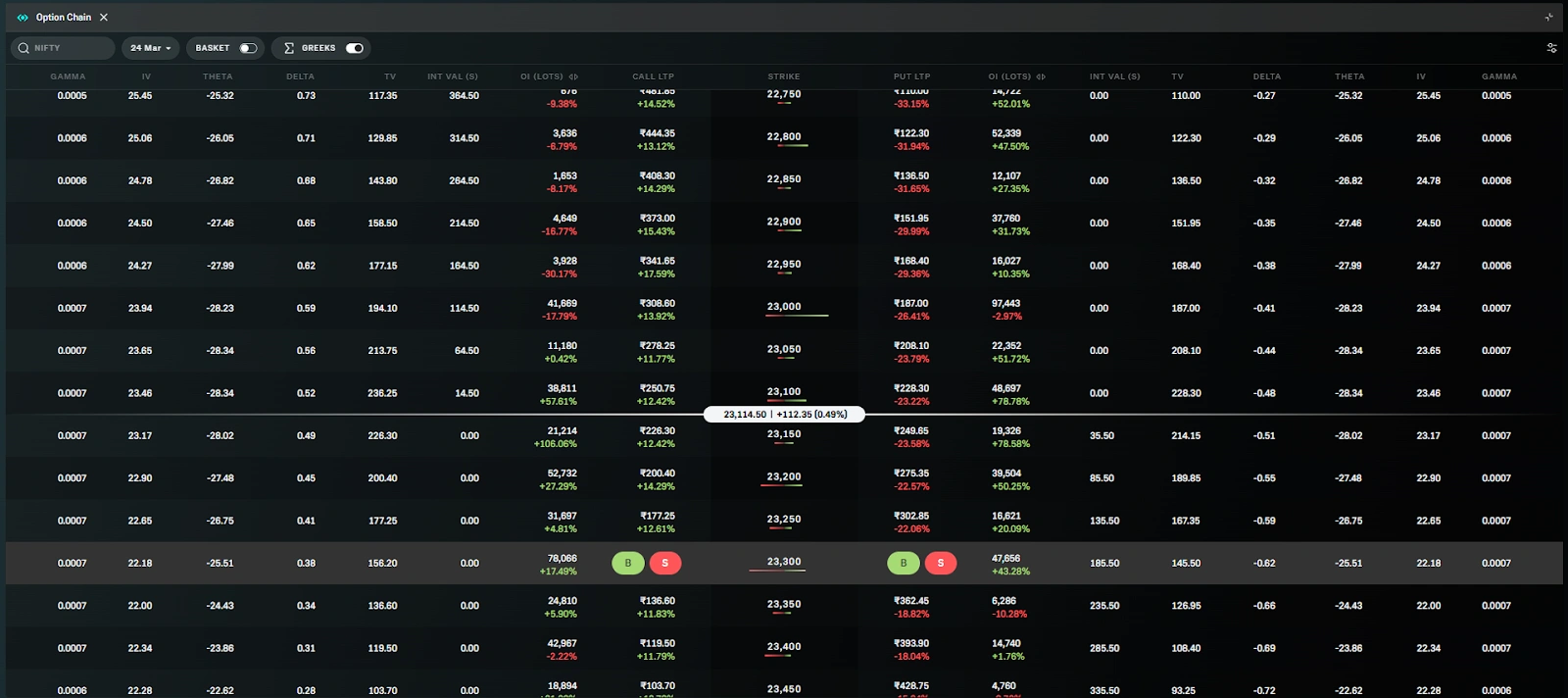
Traders can see the Delta of any option from here.
ATM options give other benefits as well. They have trading volume and tighter bid-ask spreads. This means that the trader who trades ATM options ends up spending less money on slippage. The execution quality is also better for ATM options. On the other hand, OTM options often suffer from wide bid-ask spreads, sudden price jumps and difficulty exiting positions.
Another benefit of trading ATM options is the ability to control risk. If the market moves in our favour, the ATM options will become profitable very quickly, and the traders can exit the position. If the market moves likely against us, the adjustments are possible, and the trader can either roll up or roll down the options. This kind of risk adjustment is very challenging in OTM options, as they can lose significant value due to time decay.
Finally, the psychological benefits are also there for trading ATM options. When trading large quantities of cheap OTM options, traders can feel emotional pressure. Even small price changes are visible in P&L fluctuations due to the large quantities. It is always better to trade fewer lots of ATM, which have a high success probability.