Weekly vs Monthly Expiry: Which Is Better for Trading?


Nifty has both weekly and monthly expiries. Nifty weekly options expire on every Tuesday. And Nifty monthly options expire on the last Tuesday of the month. A lot of traders often get caught in a simple debate: “Should I trade weekly expiry or monthly expiry?”
The usual answer is to go for weekly options as they feel more attractive. Weekly options are fast, exciting and offer quick returns. On the other hand, the monthly options look boring, slow and less dynamic. But the real question should be: what kind of trader are you? And what is your actual edge? The aim of trading is not to pursue exciting strategies but to find the right trade and the right price of the option before taking entry.
Understanding the Core Difference
Here is the difference between weekly and monthly options.
Weekly options have the following characteristics:
- Extremely fast theta decay
- Highly sensitive to small price moves
- Strong gamma impact (rapid premium changes)
Let us show you one weekly option. Here is the money strike option (23,150 Call), which is expiring in 2 days.
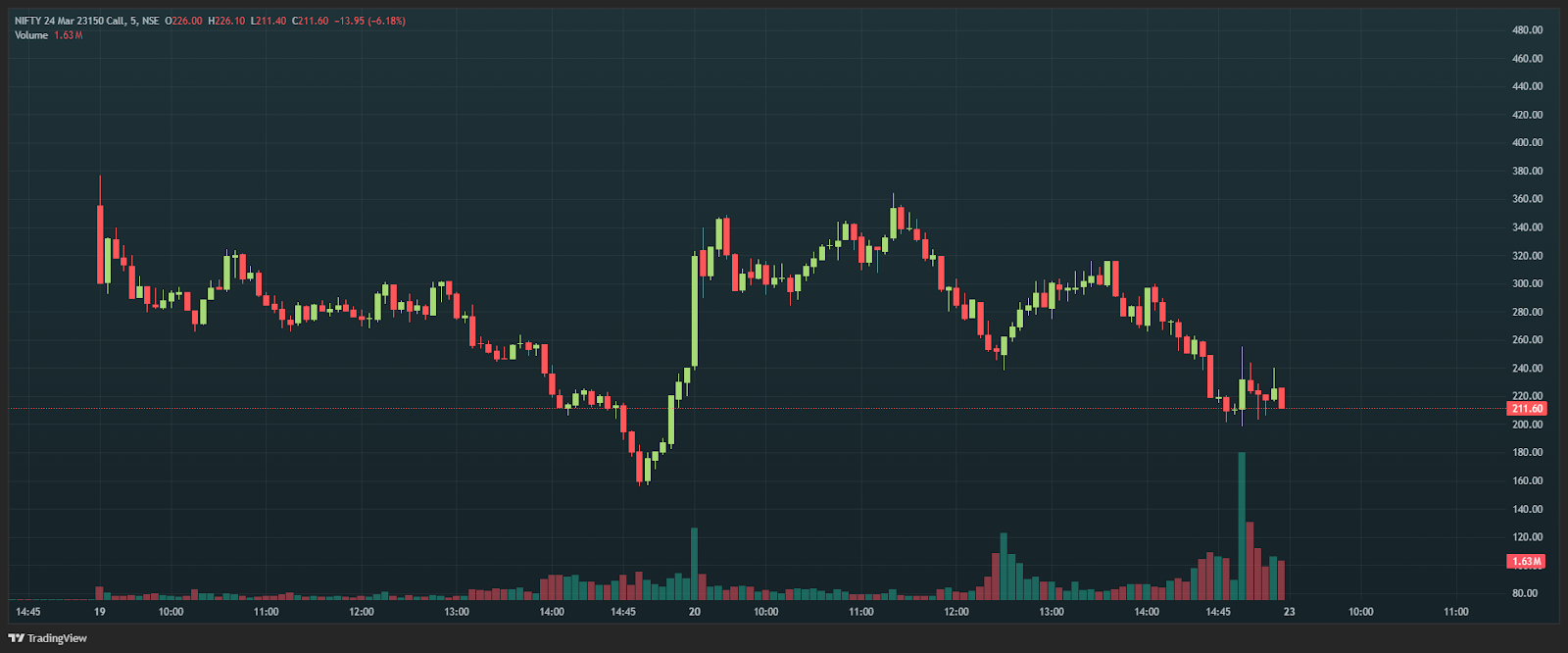
The option has reached between 360 and 160 in the past 2 days. And the highest volume is approximately 6.1 in the last two days.
Monthly options, on the other hand, have the following characteristics:
- Slower decay
- More stable behaviour
- Higher vega sensitivity (volatility impact)
Here is the same 23,150 call option, but this time on the monthly expiry.
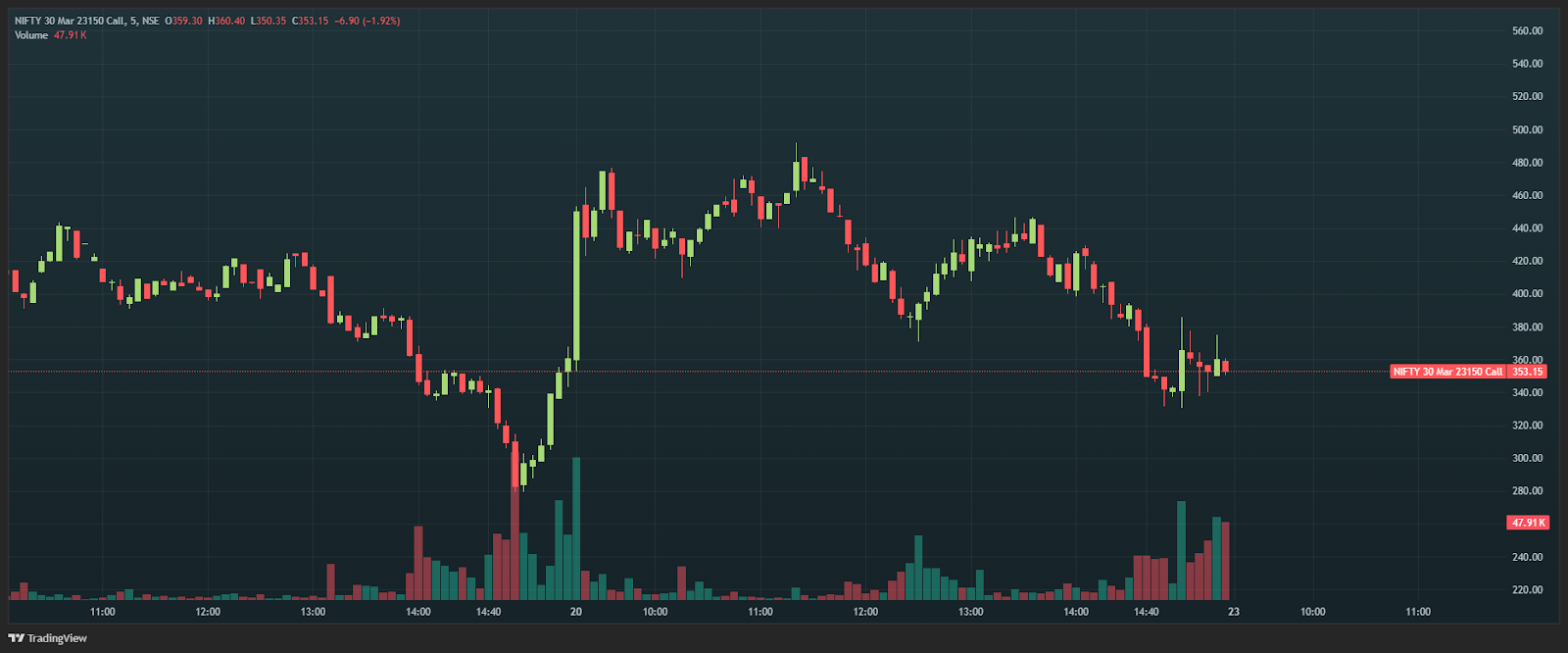
As shown in the chart, the 23,150 call option has a maximum price of ₹492 and a minimum price of ₹297. However, the option is more stable. This difference alone changes how trades should be structured.
The Illusion of Weekly Expiry
Let us understand the illusion of Weekly expiry. While weekly options give the impression of easy money because premiums decay quickly, option sellers usually prefer them. However, there is a hidden risk. Since weekly options have high Gamma, even a small move in the underlying can cause large movements in the option. A seemingly safe position can turn against you very quickly. In simple terms, weekly options reward you frequently but punish you suddenly.
The Stability of Monthly Expiry
The monthly options behave very differently. They are very slow, giving traders ample time to adjust positions. The impact of Gamma moves and spikes is relatively lower in monthly options than in weekly options. So, if you are a positional trader and want to take it slow, monthly options give you a good, structured view of volatility. Similarly, if you expect IV to rise or fall over time, monthly options provide a better platform to express that view. So, in simple terms, monthly options are best suited to positional and strategy-based trading rather than to reactive trading.
The Real Edge: It Depends on What You’re Exploiting
There is no universal answer to this question. The edge comes from understanding what you are trying to capture. If you are looking for quick theta decay and short-term inefficiencies or if the setup is based on events, then weekly expiry works. However, the trader should have fast execution, strict risk management, and experience with intraday price movements.
On the other hand, if you are trading based on volatility mispricing or have a positional view, then strategies like spreads and calendars work. However, the trader should think in terms of probability, adjustments and portfolio-level risk.
Summary
The question of whether to trade weekly or monthly expiries should be changed to: Are you trading speed, or are you trading structure? While weekly expiry can generate quick movements and quick returns, the trader should have extreme discipline and should be able to trade with precision. On the other hand, monthly expiry may feel much slower, but it does offer more stability and strategic depth. A lot of intraday traders are drawn towards weekly expiry because it looks exciting. And many experienced traders who trade with large capital prefer monthly structures because they understand that consistent income comes from managing risk and position sizing.