Trading Breakouts with Options Without Overpaying IV


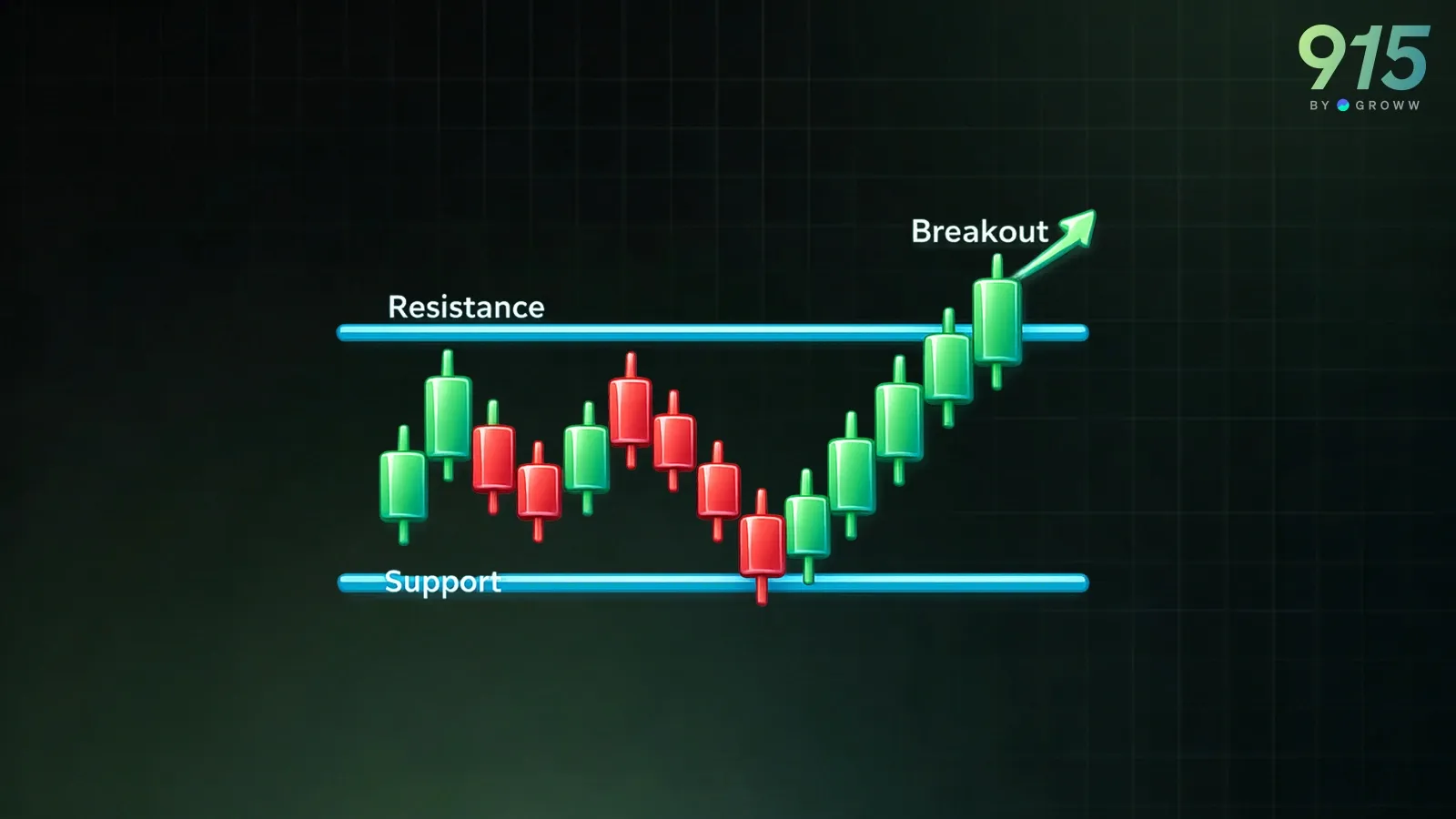
There are multiple types of trading. Either a trader can go for mean reversion strategies. This basically means the trader is looking for resistance and support, and when the stock or index reaches these levels, the trader expects a reversal. So, if the stock reaches the resistance level, the trader expects the market to decline. On the other hand, if the stock touches the support, the trader expects the market to rise.
The other kind of trading is breakout trading. This is more popular where the trader is looking to take the entry in the direction of the movement. One of the most common ways to take the trade is when a level of resistance or support is broken. Since option buying offers good risk-to-reward if the market is trending in the right direction, traders look to buy calls when the market is rising. And they go to buy when the market goes down.
But there's a hidden problem.
The major problem in trading breakout strategy using options is that by the time the trader takes the entry, the options are already overpriced due to high volatility. As a result, even when the market goes in the correct direction, the option value can actually decrease because IV declines. Let's understand how to trade breakouts more intelligently using options without falling into the volatility trap.
The Hidden Trap in Breakout Trading
Often, the volume is high when the Breakout is real. This is also accompanied by high volatility, as many traders are looking to go with the market. It is well known that a breakout is triggered when smart money takes large positions. So, if the trader is using options to take the entry, most of the time the option volatility is high, which leads to expanded option premiums and higher risk.
When a trader is actually taking an options entry, he is not just paying for the direction; he is also paying for volatility. This creates a difficult situation. Even if the Breakout is real and the movement is slow, the trader can still lose money due to IV Crush.
So, when trading options, the trader should ask two things. Will the market go up or go down? So essentially, he is betting on the direction. And secondly, will volatility keep increasing? This shift in thinking is what separates structured traders from reactive traders.
Example: NIFTY Around 23,000
Let us assume that Nifty is trading in a tight range between 22,800 and 23,000. So, the resistance is 23,000. And the support is 22,800. Let's also assume that we are currently in a mid-to-high IV range. Now, the next morning, the market opens slightly gap-up and breaks 23000 on high volume. A lot of traders will go for a call buying opportunity here.
For instance, they may buy 23,000 Call at ₹220. Now, suppose the market continued to rise with momentum. The market quickly reaches 23100. However, it is taking a little breather and staying there for a couple of hours. This is the issue. Even though the market has risen by 100 points, the trader will still make money due to the Delta movement.
However, since the market has stabilised, the IV may drop, and the trader loses due to the Vega. The option might only move to ₹250 or even less. Despite being correct in direction, the reward is disappointing.
Smarter Ways to Trade Breakouts
1. Use Call Debit Spreads Instead of Naked Buying
So a better way of taking the entry is to use call debit spreads.
For example:
- Buy 23,000 CE
- Sell 23,300 CE
The benefit of doing this is that the total cost is reduced. Even though there is limited upside, the trader now has less exposure to IV and a higher restore award. The trader now needs only a small movement to be profitable. This is one of the most practical ways to trade breakouts efficiently.
2. Use Synthetic Positions
Another way to trade is to trade synthetic positions. So if the trader wants to go for a directional exposure without overpaying for the IV, he can make a bullet trade with two positions:
- Buy Futures
- Buy a protective Put
The overall payoff diagram will be very similar to the call buying payoff diagram. However, the trader is not paying for the inflated call premiums. It is important to note that this strategy might be margin-intensive, since the future is being purchased. Also, since two trades are being executed, the total brokerage and other trading costs might increase.
3. Avoid Far OTM Options
A lot of times, traders look for cheap options. This is a very big mistake. Far OTM options during breakouts look very attractive given their low premiums. But they are actually overpriced given their volatility and have an extremely low payoff. They require a very strong move to be made very quickly. Instead, stay closer to the ATM or slightly OTM.
Summary
Breakout trading can be exciting, but trading it using options requires a lot of discipline. When using options for breakout strategies, the trader should focus on entry timing, structure, and strike selection. The trader should also keep in mind that volatility is important when going for these trades. But if you treat them as priced instruments influenced by volatility, your approach changes completely. You stop chasing breakouts. You start structuring them. And that is where consistency begins.