What Is Overnight Trading?
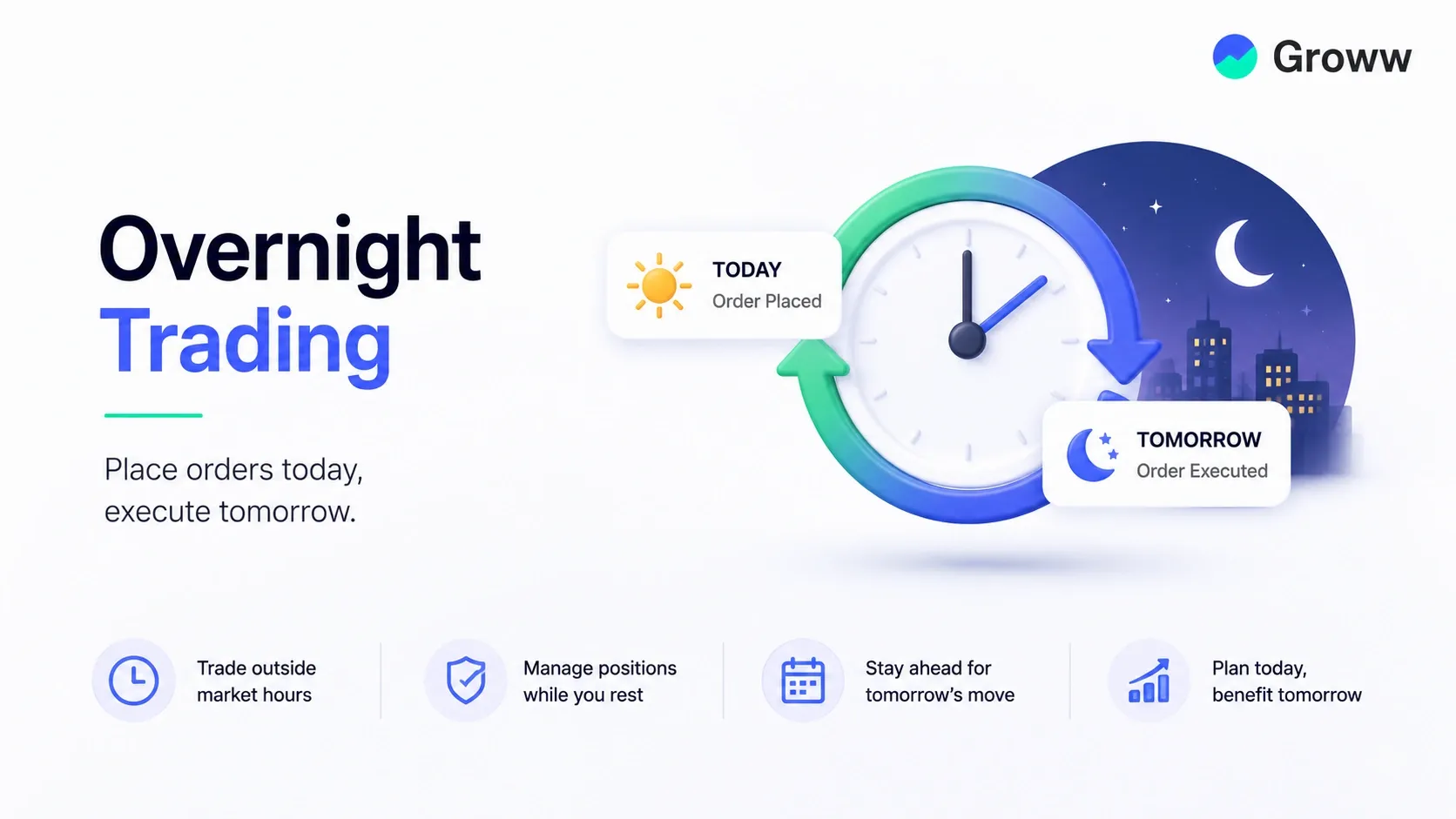


Overnight trading refers to the buying and selling of stocks and other financial instruments outside regular trading hours. This is usually done through ECNs or electronic communication networks. This enables traders and investors to express their reactions to global developments, events, news, updates, and earnings reports that arise after the market closes. In this case, overnight trading occurs after the standard after-hours sessions end and continues until the pre-market session begins.
It offers more flexibility for traders to respond to overnight news and manage risks, while taking advantage of global markets without waiting for the opening bell the next day. Of course, there are risks, including lower liquidity, higher volatility, and wider bid-ask spreads than during regular trading hours (which may lead to considerable price gaps).
Also, note that order processing is via ECNs, which accumulate trades and may lead to slower execution times. Holding positions overnight may lead to major price changes before the market opens the next day.
How Overnight Trading Works
Overnight trading works in the following ways:
- After-market orders (AMOs) - Placed by traders after the market closes (3.30 PM in India). They are held and executed once the exchange opens again.
- Electronic communication networks (ECNs) - May enable trading to continue for extended hours (24/5) after the main session.
- Limited Order Types - Many brokers may restrict overnight trading to limit orders rather than market orders for risk management.
- Gap Risks - Prices may soar or fall sharply at the next market opening due to news or updates released overnight.
The main advantage of overnight trading is that it provides greater flexibility to trade around daily schedules, especially for foreign investors and NRIs, and to act on breaking news before the trading day begins.
However, low liquidity may lead to wider bid-ask spreads and make it hard to execute trades at the preferred prices. In most scenarios, overnight trading is used for volatile stocks or to manage positions in global markets.
People Also Read: Outstanding Shares vs Floating Shares | Types of Stock Market Orders
Overnight Trading vs After-Hours Trading
Overnight and after-hours trading are both types of extended-hours trading that occur outside regular trading hours. For example, after-hours trading usually runs from 4 PM to 8 PM ET, while overnight trading runs from 8 PM to 4 AM ET for U.S. stocks.
In India, overnight trading involves holding securities across multiple trading sessions to capitalise on news updates, while after-hours trading involves placing buy/sell orders between 3.45 PM and 8.57 AM for execution at market opening (for equity).
The purpose of overnight trading is to capture post-market earnings shifts or long-term trends. After-hours trading, on the other hand, is used by traders who cannot track the market during the day. They can set orders for the next day’s opening. Holding positions overnight exposes traders to greater volatility due to unexpected announcements or developments. AMOs are queued orders and not live trading in India.
As a result, after-hours trading may usually have higher volume than overnight sessions globally, with both carrying the risks of unexpected price movements (due to limited participants) and wide spreads.
Which Markets or Products Allow Overnight Participation
Overnight participation is usually achieved through the following:
- Stocks (Equity) - AMOs may be listed on the BSE between 3.45 PM and 8.59 AM, and on the NSE between 3.45 PM and 8.57 AM.
- Derivatives (F&O) - Futures and options can be placed at any time between 3.45 PM and 9.10 AM the next day.
- Currencies - Currency trading through AMOs is possible between 3.45 PM and 8.59 AM.
- Commodities - The commodity market (NCDEX/MCX) runs during the day and also has an evening session up to 11.30/11.55 PM.
- Foreign Exchange (Forex) - While mostly global, Indian traders do engage in Forex trading through several platforms that may operate 24 hours a day on weekdays.
Why Traders Hold or Place Trades Overnight
There are several reasons why traders may hold or place trades overnight, including the following:
- Capturing post-market earnings and news developments - Several companies release their financial results, or earnings reports, after the market closes or before the opening bell. This enables traders to potentially profit from price movements.
- Responding to global developments - Overnight traders may capitalise on economic data reports, policy changes, and other geopolitical events across varying time zones.
- Leveraging price gaps - Stock prices often open with a major price drop or jump (a gap) relative to the previous day's close. Holding positions may enable traders to profit from overnight price movements.
- Higher convenience and flexibility - Traders who do not have the time or scope to track markets during the day may use AMOs (after-market orders) for placing orders when they have time.
- Hedging and diversifying the portfolio - Investors may hold positions across different markets to diversify. They may also use derivatives such as futures and options to safeguard their portfolios against any market risks.
- Strategy and momentum aspects - Some investment strategies may involve holding stocks that have demonstrated robust positive momentum (going above the volume weighted average price) during the day. These investors bet that this momentum will continue into the next trading day as well.
Key Risks of Overnight Trading
Here are some of the main risks of overnight trading for your perusal:
- Price Gaps - Considerable price drops or jumps may happen between the next opening and market close. It may bypass stop-loss orders, leading to higher losses than planned.
- Lower Liquidity & High Volatility - A smaller number of market participants may lead to lower trading volume and liquidity. This may lead to orders being harder to fill and to erratic price movements.
- Wider Bid-Ask Spreads - Lower liquidity may also lead to wider gaps between the bid and ask prices, thereby increasing transaction costs.
- Sensitivity Due to Overnight News - Positions may be exposed to economic data and updates, earnings reports, and other geopolitical events that happen after hours.
- Lower Monitoring and Control - Traders often cannot respond to market-moving updates and news in real time. This may lead to a lack of proper control over positions.
- Limitations on Execution - Restricted order types and limited access to all stocks may also lower overall trading choices in this scenario.
Gap Risk, Spread Risk, and Slippage Risk
Here’s looking at these key risk types in more detail below:
Gap Risk:
- It is the risk that a stock opens considerably higher or lower than its previous closing price.
- When the market opens, the price gaps over the levels where the trader may have put a stop-loss. It may lead to the stop being filled at a worse price in some cases.
- The key reasons include economic updates, announcements, breaking news, or corporate earnings reports during after-hours trading.
- Stop-loss orders do not guarantee protection in this case. If they are bypassed, there may be greater losses than initially planned.
Spread Risk:
- This means the higher trading costs due to wider bid-ask spreads during or in the build-up to the market's closure.
- Lower liquidity and fewer market participants lead to lower demand (bids) and supply (asks).
- A wider spread means it is costlier to enter or exit a position instantly, thereby increasing transaction costs.
Slippage Risk:
- This happens when a trade is executed at a price different from the expected or requested price.
- It may happen when the market is volatile or when a high-gap scenario is in place. In this case, prices may move faster than the order can be filled.
- Traders seeing negative slippage, i.e. when the buy order fills higher than anticipated or a sell order fills lower, is a common occurrence. It may lead to a worse exit or entry price.
How Overnight Trading Differs from Intraday Trading
Here are the main differences between overnight trading and intraday trading.
- Timeframe and risk levels - Intraday trading positions are closed on the same day to avoid overnight risks, such as news-driven price gaps. Overnight trading holds positions over one or more nights, thereby exposing investors to major fluctuations in prices and global developments.
- Spreads and liquidity - Intraday trading usually operates during high-liquidity timeframes (daytime), thereby ensuring tighter bid-ask spreads. Overnight trading usually comes with lower trading volumes and fewer market participants, leading to reduced liquidity and wider spreads.
- Capital requirements and margin - Intraday trading comes with lower margins, enabling higher leverage. Overnight trading, on the other hand, may require the full margin due to higher exposure to risks.
- Strategy aspects - Intraday traders rely on technical indicators and analysis to make swift decisions. Overnight traders look at long-term trends, earnings reports, and fundamental news/data that may influence the opening price on the coming day.
- Auto Square-Off feature - Intraday trading positions are automatically closed before the market closes. However, overnight positions are carried forward without automatic closing by the brokerage platform.
Here’s looking at these differences through a small table below:
|
Key Aspect |
Intraday Trading |
Overnight Trading |
|
Timeframe |
Same day |
One or multiple days/weeks |
|
Risk |
Low (no overnight risks) |
High (gap risks) |
|
Margin |
Low (high leverage) |
High (full margin) |
|
Liquidity Levels |
High |
Low |
|
Strategy |
Scalping or technical analysis |
News/fundamentals for long-term bets |
Risk Management Tips for Overnight Positions
Here are some handy risk management tips for overnight positions:
- Lowering the position size - Holding smaller positions overnight may reduce the potential financial impact of any major market gap against the position.
- Using mandatory stop-losses - Traders should always set stop-loss orders to limit losses from adverse price movements that occur when the market is closed.
- Bypassing major events - Another strategy is to avoid holding positions during anticipated events that may lead to high market volatility. These may include announcements, economic reports, earnings releases, and policy changes.
- Diversifying holdings - Traders should not concentrate all their capital in a single sector or stock. This will help lower the impact of any adverse sector-specific news updates or developments.
- Using hedging strategies - One option is to hedge, i.e., buy put options to safeguard long positions. It may help mitigate losses to an extent.
- Tracking global markets - Staying informed about global news developments and other economic updates that may affect opening prices is vital.
- Understanding rollover costs - Being aware of financing costs is also vital, particularly for weekend holdings.
- Considering closing positions - In case of high uncertainty, closing positions before the market closing and reopening them the next day may be necessary. It may help eliminate overnight risk in volatile scenarios.
- Using limit orders - Using limit orders in place of market orders may help control the maximum price you are willing to pay or receive. However, this carries the risk that the order will not be filled.
Is Overnight Trading Suitable for Beginners
Overnight trading is usually not recommended for beginners. This is mainly due to its high-risk nature and low liquidity. Here are some reasons why it can be a risky proposition for beginners:
- Volatility and price gaps - Stocks may experience wild swings in response to overnight news and developments. It may lead to price gaps and possibly bypass stop-loss orders as well.
- Lower liquidity - Fewer market participants trading after hours lead to thinner markets. This makes it really hard to exit positions at preferred prices.
- Wider bid-ask spreads - Lower liquidity may lead to higher transaction costs, thereby eating into potential profits.
- Uncontrolled exposure - Traders lack real-time control to respond to negative news updates and developments when markets are closed.
Beginners looking to explore overnight trading should follow a safer path by observing price gaps and using paper trading or simulations to understand market behaviour at these times. They should use limit orders rather than market orders and opt for small positions with lower capital. Sticking to large-cap stocks or highly-traded ETFs is another must-do for beginners in this case.