The Correlation Between Commodities and Inflation
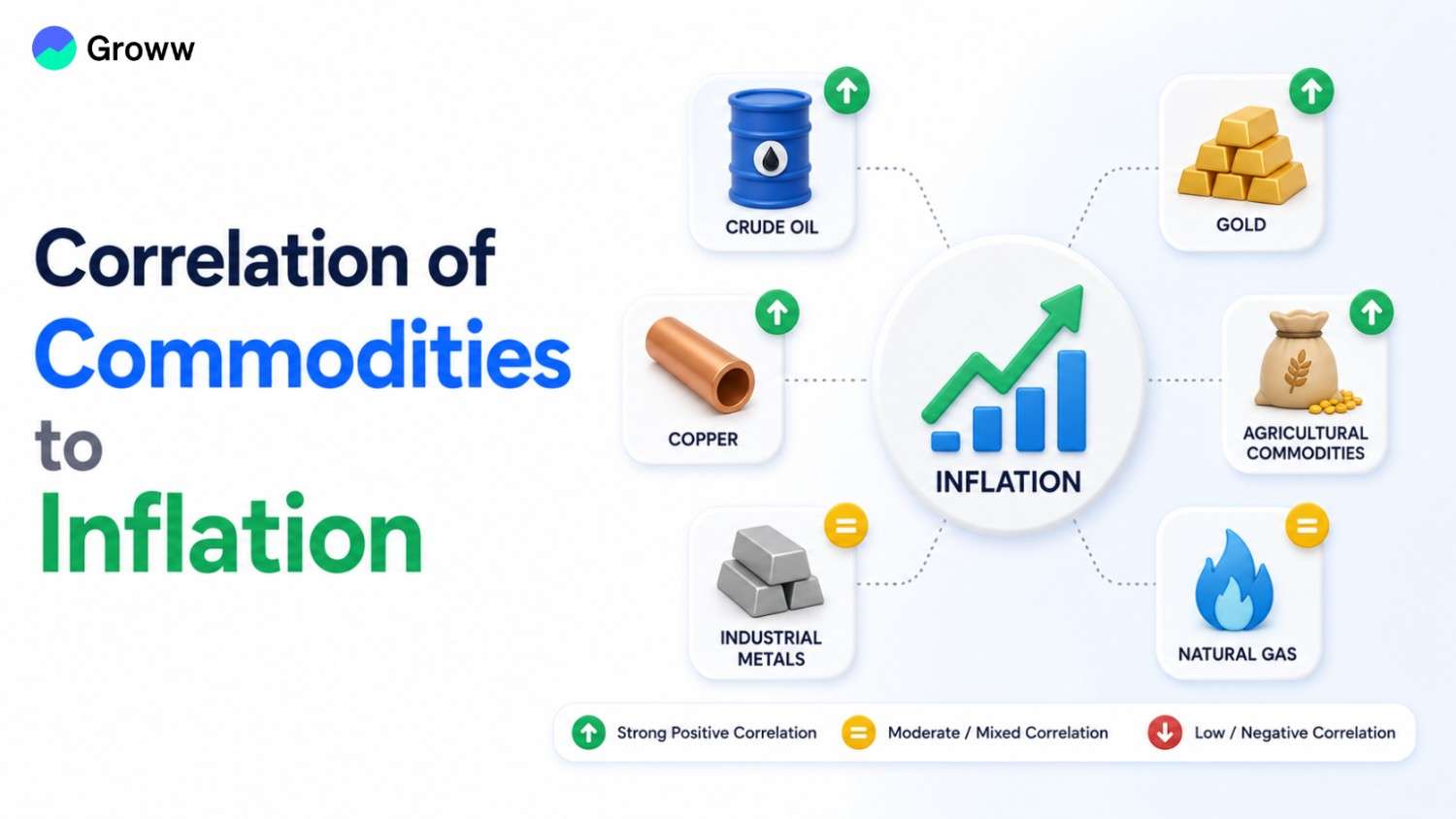


Understanding the correlation between commodities and inflation is important for commodity traders, companies, retail investors, and other market participants. Commodities are closely linked to inflation because they underpin the production of goods and services. Let us know more about this below.
What Is Inflation?
Inflation means the rate at which the general threshold of goods and services prices increases in an economy over a certain duration. This naturally lowers the purchasing power of money over time.
Whenever there is inflation, each unit of currency buys fewer goods than before. The usual measure of inflation is the CPI (consumer price index). It indicates a broader increase in costs across sectors such as food, energy, and housing, without showing a price increase for any single item. The annual percentage change in the price index, such as the CPI, is used in the calculation.
The main causes of inflation include demand-pull inflation, which occurs when demand for goods and services exceeds supply, allowing sellers to hike prices. Cost-push inflation occurs when production costs rise (e.g., higher raw material prices or wages), forcing firms to raise prices to maintain their current margins.
Built-in inflation is another factor worth noting here, which is tied to adaptive expectations. For example, workers may demand higher wages to keep pace with rising expenses, thereby leading to a wage-price spiral across the economy. Monetary policies or higher growth in money supply may also lead to inflation in the long run.
Why Commodities Are Closely Linked to Inflation
There is a close link between commodities and inflation, since the former represent foundational materials such as food, metals, and energy that are used to produce various crucial goods and services.
With rising demand or tightening supplies, commodity prices rise, thereby increasing production costs and, in turn, consumer prices. They serve as key inflation indicators and as a hedge against currency devaluation. So, when raw material prices rise, producers may pass higher production costs on to consumers, thereby leading to inflation.
Commodity prices often rise more quickly than consumer prices during economic booms, making them early indicators of inflationary pressures. There is also the practice of using commodities as an inflation hedge, where traditional assets such as bonds and stocks may underperform during periods of high inflation.
On the other hand, commodities like gold and others may sometimes retain or even enhance their value in these periods, thereby helping you hedge against inflationary pressures in the market.
Sudden, unexpected structural shortages due to supply chain disruptions, natural disasters, geopolitical developments, etc., may lead to sharper spikes in commodity prices. This may immediately account for the rise in inflation rates. Also, with various commodities priced in U.S. dollars, depreciation of the U.S. dollar may lead to nominal price hikes as well.
How Inflation Affects Commodity Prices
There is a direct impact of inflation on commodity prices. So, for example, there is cost-push inflation as raw materials become more expensive to produce or extract. These higher costs may be passed on to consumers during these times.
During high inflation, investors often show greater demand for safe havens, such as gold or silver, to hedge against currency depreciation. Unlike consumer prices, which may be fixed by contracts, commodity prices may adjust rapidly and often overshoot long-term equilibrium thresholds in response to sudden economic shocks.
Energy prices and inflation are correlated, for example. Energy prices and agricultural commodity prices frequently rise due to higher fertiliser and transportation costs, with a lag of 3-5 months before they are reflected in consumer prices.
While inflation may raise commodity prices, it may also prompt central banks across countries to raise interest rates to combat it. It may eventually boost the currency and, in turn, lower commodity prices.
Commodities as an Inflation Hedge
The concept of commodity inflation hedge has to be understood carefully in this regard. Commodities often serve as a tangible and strong hedge against inflation, since their prices tend to rise in step with the costs of energy, raw materials, and other goods during inflationary periods. This often outperforms bonds and stocks when purchasing power goes down.
Hence, a 5-7% allocation to a diversified portfolio could offer some protection against price hikes, although it is highly volatile and does not generate any income.
Commodities like metals, oil, and agricultural products have tangible value and serve as a real asset buffer, unlike other financial assets. Even a one percentage-point hike in U.S. inflation has historically driven a seven percentage-point gain (real returns) in commodities. They have lower correlations with bonds and stocks, meaning they often rise when traditional portfolio investments fall.
For investments, broad-based commodity indices are usually recommended, with sectors like precious metals (gold) and energy (oil) historically offering the strongest safety and protection. Hence, there is a direct correlation between gold inflation and the precious metal's preferred status as a safe haven during inflationary periods. Investors may gain exposure through commodity stocks, ETFs/ETNs, and futures contracts.
Correlation of Different Commodity Groups with Inflation
When examining the correlation between commodities and inflation, it is essential to consider different commodity groups as well. Here is a closer glimpse of the same.
Energy Commodities (Crude Oil, Natural Gas)
There is a high, direct correlation between commodities in this segment and inflation, which works as both a key indicator and a driver. Hence, you will see how energy prices and inflation are closely related.
As the largest input cost worldwide, any increases in natural gas and crude oil prices directly raise manufacturing and transportation costs, thereby driving higher headline inflation. Energy thus remains a vital hedge for investors, especially during supply shocks caused by geopolitical disruptions. However, the high price volatility often makes it a risky short-term investment.
Precious Metals (Gold, Silver)
As mentioned, there is a strong correlation between gold and inflation, with precious metals often serving as hedges against currency depreciation/devaluation. Gold usually performs better during sudden, unexpected, or high inflation, or even when investor confidence in central banks is low.
Gold mostly moves independently of the daily inflation figures. It is more driven by central bank demand and geopolitical developments/uncertainty. Silver hedging is a hybrid strategy that offers safe-haven investments alongside exposure to industrial demand.
Industrial Metals (Copper, Aluminum, Zinc)
Industrial metals such as aluminium, copper, and zinc usually show closer correlations with economic growth cycles and inflation expectations. They usually work as bellwethers for expansionary inflation. Metals usually perform better when strong infrastructure and manufacturing demand drive inflation.
Copper has often had a strong impact on core-level inflation due to its vital role in the energy transition. It is often a real hedge for inflation, which may sometimes outperform even gold when inflation combines with a surge in economic growth.
Agricultural Commodities
Agricultural commodities such as soybeans, corn, and wheat have a direct, high impact on food inflation. This is mainly driven by supply-side shocks, such as diseases and weather conditions. Such commodities exhibit higher volatility and often experience sharp spikes during periods of supply shortages.
Yet, agricultural commodities may not be as reliable a hedge in the long term as energy or gold. This is because crops may be spoiled or damaged, and unpredictable weather poses risks at all times.
Thus, agricultural and energy products are ideal for direct hedging, while gold is the best choice for preserving wealth. For growth-driven inflation, suitable choices include industrial metals such as copper.
Inflation Expectations vs Actual Inflation
Commodity prices may serve as a key indicator, with higher inflation expectations driving up commodity prices (food, oil, etc.) as investors hedge. In turn, rising commodity prices may also increase consumer inflation expectations. Yet surges in commodity prices are often temporary relative to long-term or broader inflation.
Here are some main dynamics of inflation expectations compared to actual inflation -
- Key Indicators: Commodities such as agricultural products and crude oil frequently rise, signalling higher inflation. They serve as a more forward-looking indicator of broader price increases.
- Feedback-Based Aspects: Whenever actual commodity prices rise, household inflation expectations increase. At the same time, if households anticipate higher inflation, they may invest more in commodities, driving prices upward.
- Divergence (Actual vs Expected): Prices of actual commodities may be more volatile than expected. For instance, a 63% increase in commodity prices may lead to only a nominal increase in inflation expectations over the next year.
- Transitory Factors: Commodities, while used to hedge against inflation, may be affected by supply-side shocks. However, these may ultimately be reversed.
- Lower Sensitivity: Long-term inflation expectations and their sensitivity to commodity price movements have historically come down over the last four decades.
In recent years, there has been a visible moderation, with commodity prices moderating considerably in 2023-24 owing to higher supply following a period of higher inflation. As of mid-2025, households in India anticipated only moderate, rather than sharp, rises in commodity prices.
Interest Rates, Inflation, and Commodities
Interest rates form a key interconnected loop with commodities and inflation. High inflation prompts central banks to hike interest rates, thereby raising borrowing costs and strengthening the currency. This usually puts downward pressure on commodity prices.
Alternatively, low inflation means lower rates, which support higher demand. Rising inflation increases the cost of production and demand for various crucial raw materials, thereby lifting commodity prices.
As a result, commodities often outstrip other conventional assets during high-inflation durations. Higher interest rates may also increase the cost of carrying inventory for various commodities, thereby putting downward pressure on their prices.
With most commodities priced in USD, a stronger dollar (often driven by higher interest rates) makes them more expensive for foreign buyers. Hence, it usually drives prices down. Gold often flourishes in inflationary periods, though it may be affected by rising interest rates (unless real interest rates are negative). This makes it an inverse and complex relationship at times.
At the same time, rising interest rates may negatively affect sectors with higher borrowing requirements, such as real estate, while benefiting the financial industry and other sectors.
When Commodities Do Not Perform Well During Inflation
While mapping the correlation between commodities and inflation, it’s also essential to know when commodities underperform during inflationary periods. Here’s when commodities may fail to hedge against inflation:
- Rate Hikes or Aggressive Monetary Policies
Central banks often hike interest rates to combat inflation. In some cases, it may lead to an economic slowdown and lower overall demand for energy and industrial metals. - Robust U.S. Dollar
With most commodities being priced in USD, the rising dollar will naturally make them costlier for foreign buyers. This may lead to lower demand and, in turn, lower prices. - Overproduction or Downturns (Cyclical)
Higher prices may spur production, creating surpluses that can trigger a price crash (e.g., bumper crops in the agricultural sector). - Economic Recession or Slowdowns
If there is a major drop in consumer demand accompanied by inflation, several commodities may fail to hold their proper value. - Higher Volatility
Note that commodities are not buy-and-hold assets. They may sometimes crash quickly after a rapid, speculative rise, thereby failing to retain their purchasing power in the long run.
How Traders and Investors Use Inflation-Commodity Correlation
The correlation between commodities and inflation can help investors and traders hedge their portfolios. Here’s how they may use the same:
- Inflation Hedging:
Commodities often work as a direct inflation hedge. This is because, as prices of goods and services rise, the raw materials used to produce them also increase in value. - Diversification of the Portfolio: Commodities often have negative or low correlations with traditional assets, such as bonds or stocks. Hence, they are often used to diversify portfolios, especially when inflation reduces the value of future coupons and dividends.
- Safe Havens:
During times of high inflation or volatility, investors may shift more toward safe havens, such as commodities like gold, to safeguard their wealth. - Finding Market Trends:
Investors track commodity price movements, especially in food and energy, to assess inflationary pressures. This is because they are vital components of the CPI (Consumer Price Index). - Sectoral Risks:
Higher inflation often drives up commodity prices, which may negatively affect companies' profits. This is more for sectors that depend heavily on raw materials, thereby leading to a reallocation of investor funds.
It is also vital to note that commodity prices may be affected by other factors, such as currency fluctuations and even supply-demand shocks, that are independent of inflation.
Risks of Using Commodities as an Inflation Hedge
While you may find it effective to use commodities as an inflation hedge, there are some risks of doing the same as well. Some of them include the following:
- Huge Volatility: Prices of oil, natural gas, and other commodities may swing wildly and unpredictably at times. This depends on various geopolitical events and disruptions, as well as supply chain shocks, sudden weather disruptions, and more. It often surpasses the volatility levels of bonds and stocks.
- Zero Passive Income Opportunities: Unlike financial assets like bonds and stocks, commodities do not pay any dividends or interest to you. This means that your returns are fully dependent on price appreciation.
- Costs and Complexity Factors: Commodity investments often involve futures contracts, many of which are complex. At the same time, you may have to incur costs for rolling contracts that switch from one month to the next.
- Global and Currency Risks: Commodity prices are often quoted in USD, which means their values may reflect currency fluctuations rather than domestic inflation.
- Timing Risks: As an investor, you need to time your entry and exit points correctly. This is because commodities may swiftly rise before crashing.
- Basis Risk: The difference between the futures and spot prices may change over time, causing the hedge to fail eventually.
So, as you can see, while commodities may offer better protection during times of high inflation, they are not perfect hedges. They should ideally represent a moderate portion of your diversified portfolio.